Business901 Book Specials from other authors on Amazon

Showing posts with label lean. Show all posts

Tuesday, November 5, 2013

Stop Looking for Mister Right

They simply don’t exist. I see people building Persona after Persona targeting that Ideal Customer. The problem that exists is that ideal customers are few and far between. In a recent blog post, A Persona Board deserves a Place at the Table, I described creating User Personas from your existing customers and then grouping them into quadrants based on product/market fit or relationships. The purpose of this is not so much to learn about customers as it is to learn about yourself and your core capabilities.

A fun exercise once you have created customer (user) personas, you can segment them according to how they fit in the quadrants mentioned in the above post. Then start asking these questions and others you may think of.. 

Relationship Customers:

  1. Which customers buy from you because they dislike the relationship they have with your competitor?
  2. Which customers buy from you because they like the relationship they have with you?

Product/Service (I will only use Product going forward) Customers:

  1. Which customers buy from you because you have a better value proposition (price/function) than your competitor?

Relationship Prospects:

  1. Which prospects buy from your competitor because they like the relationship they have with your competitor?
  2. Which prospects buy from your competitor because they dislike the relationship they have with you?

Product Prospects:

  1. Which prospects buy from your competitor because your competitor has a better value proposition (price/function) than you?

Marketing is in the business of creating customers. If we want to create a customer, we must take a divergent view versus a convergent view. Most marketing schemes, funnels and all that stuff are great at telling you how to manipulate a customer through the process to create a buyer, but few of them tell you how to create targeted prospects. A simple process is to use existing Customer Personas and create Prospect/Competitor Personas based on Relationship or Product groups.

When we look at the existing differences, we start identifying key points that we can address to gain access to others. In the Lean world, we call these opportunities gaps. We identify these gaps, and create different scenarios on how to close the existing gaps. We seek to understand why prospects may or may not move towards a target.

When viewing this from a structural tension metaphor, we will notice resistance as we try to coerce the customer towards the new target or condition. See my blog post, A New Approach to Lean with Robert Fritz.. We will oscillate between these two positions unless we can find common agreement of purpose. I like using the Theory of Constraints Evaporating Cloud (How to See the Other Side of a Conversation) as the way to resolve the difference. If we can find an overall purpose that will become a shared understanding – it resolves the conflict, it creates an opportunity for us to give an opportunity for prospects to move from one particular state to a different (closer to our thinking) state. It is the shared understanding that must exist to create the change in state.

Friday, November 1, 2013

Lean Service Design Slidedeck

At the ASQ 2013 Service Conference, this week, I had the honor of giving a sixty-minute presentation on Lean Service Design. All the participants of my presentation received a CD that contained my Lean Service Design Program. This is the slidedeck from the presentation.

I also introduced CAP-Do (More Info) to the audience. CAP-Do is a systematic way to address the problems (pain) or opportunities (gain) from the use of our products and services.

Purchase the Lean Service Design Program!

Or, purchase the 130 page PDF for download, Lean Service Design

Friday, October 25, 2013

Boundaries of Kanban

Markus Andrezak is speaking at the upcoming Lean Kanban Central Europe Conference (It is Hamburg, Germany, Nov 4-5, 2013) about Boundaries of Kanban - Disruptive Innovation. An overview of Markus’s talk sums up our conversation in the podcast quite well.

Lean Kanban Central Europe Conference: Kanban is fantastic in the support the flow of product development and self improvement of teams in that area. However, at each time the process defined through Kanban poses an impediment to work in the creative field. While Kanban may very well fit to work in the domains of product maintenance and iterative, feature by feature innovation, it does not support evolutionary or disruptive innovation. These types of innovation dip slightly or even more into chaos and are completely non linear processes which simply do not fit the Kanban board and process. The talk will show how to protect innovation from delivery and how to create the necessary level of communication between these areas w/o creating silos.

An excerpt from the podcast:

Joe: I've struggled when I’ve applied Kanban to sales and marketing because it is similar thinking, it is very non-linear. The way I view it is that it's not this linear progression as much as it’s an iterative circle within a certain column. That group could be always there until they come out of the loop somewhere. They could either go backwards or forward. Is that similar type thinking to what you have done or do you have a better way?

Markus: I think it's very interesting what you said because I had this discussion last week with the great guys of TLC Lab in New York, Jabe and Simon Marcus. They came up with the similar idea because they tried to use Kanban in the way that you described it.

What I said to them is that you can put that work on the Kanban board and put a container around it and just ignore that it’s on the Kanban board. What will still happen is that people will look at the container that’s protecting this design work from the production constraints so to speak and somehow feel like it has been a stranger on the board. Now you could have a very great company culture and everybody will tolerate that stuff on the Kanban board. On the other hand, if it's on the Kanban board the Kanban system should be helpful of this work otherwise you would not put it on the Kanban board.

Again, this process is completely non-linear and going on and on as you say, my question would be of what help word Kanban be for the designers and I think of no help. If you look at what's going on in the gaming industry, how they’re coming up with new ideas for the games is in very small prototyping teams which are not working in any method. Maybe Design Thinking or maybe Design Studios, but they’re not working on any development-like or production-like methodologies. Rather what they do is something which Toyota might call set base design, so highly parallel work in very small teams to come up with lots of new ideas for a similar problem. I think this is good but you can't organize it on a Kanban, at least not that it would help so you could do Kanban but I think it would be of no help for anybody.

About Markus: Markus Andrezak has been active in different contexts as Product and Development Manager for high traffic and high revenue web sites. During the last years his main focus has been transitions towards Lean and Kanban product management and development practices across his portfolio. With Arne Roock, he also co-authored 'Replenishment', a free eBook on Kanban. His Blog: Portagile and Twitter: @markusandrezak. You can find more information at his company website: http://ueberproduct.de/en/.

Thursday, October 24, 2013

Improving Interactions through the Lean Value Chain

Making products fly involves more than just the development team. So how do we involve, interact and improve with the non software parts of the value chain? Let Mattias Skarin walk through lean techniques and thinking that helps drive improvements across organizational borders.  Mattius is one of thought leaders of the Kanban Movement and is speaking at the upcoming Lean Kanban Central Europe Conference (It is in Hamburg, Germany, Nov 4-5, 2013). He is speaking about: Improving the full value chain & Visualization – What‘s my brain got to do with it? (Lightning Talk)

Mattias Skarin works as a Lean and Kanban coach, building systems that enables you to cut time to market and improve quality. He has helped several software teams deliver with confidence, scaled Scrum over multiple teams (cutting game cycle time from 24 months to 4) and improved life at operations using Kanban. He is an author of the book, Kanban and Scrum – making the most of both, and regularly train and coach in Lean, Kanban and TDD. He blogs on http://blog.crisp.se/mattiasskarin and the blog has one of the best set of sample Kanban boards on the planet.


Download MP3

Business901 iTunes Store.

Mobile Version

Android APP

Lean Sales and Marketing: Learn about using CAP-Do

Tuesday, October 15, 2013

Using Scenarios for Current Applications

This video does an excellent job of explaining Scenario Planning. The most common application of is for futuristic thinking and considering the different scenarios that may play out. In the video, it will comment on how this method is used in lieu of forecasting or maybe even when Predictive analytics, no longer work (Podcast,  The Power to Predict Who will...).

When you view this video take a different approach. Instead of looking at the limiting perspective of Scenario Planning for the future view it from a perspective of building Customer Scenarios along the Customer Journey. Instead of assuming a customer was going to react a certain way, we match them to the Scenarios that may happen as a result of being in this position.


If we view the Customer’s Journey as a Scenario Journey does that cause a different reaction? Would that help us to seek to understand first?

Saturday, October 5, 2013

If Value is Co-created in Use, Our Decisions Need to be Co-created

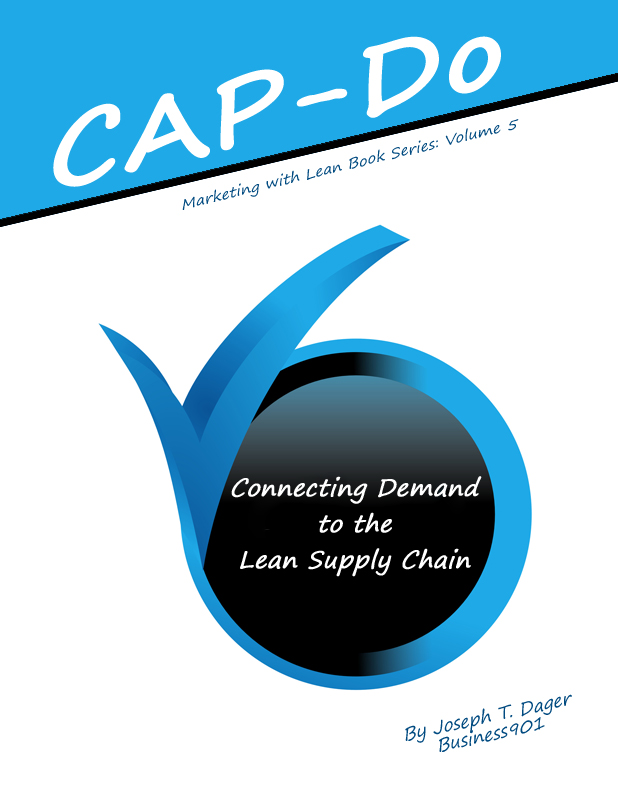
When we approach sales we typically think of how we will address the customer’s problem. What needs we need to address and how we will do this in an engaging way? We are in The Experience Economy says authors Pine and Gilmore. Though many of us dwell on the Experience Economy, I think we are moving past that at an accelerated rate. This movement has its foundation in Service Dominant Logic, where the fundamental belief is that value is co-created with customers. The value is in the use of the product or service. This type of thinking is awkward to many organizations. In my latest book CAP-Do: Connecting Demand to the Lean Supply Chain, I begin the journey discussing sales and marketing from a perspective of being systemic, emergent, and participatory.

My latest thinking has been a result of spending time with stakeholder and customer journey maps and building user personas. These processes have assisted me moving from inside-out thinking to an outside –in perspective. It also helped my clients build better customer experiences. What I realized working with customers was that many of common problems they encountered became rather standard to deal with and many even automated. When we addressed sales issues we found a striking number as either straight-forward or responding to “opportunities” we had little chance of winning. If you would like more information on my sales perspective, read the blog post, Lean Salespeople are Challengers, not Problem Solvers.

The world of sales is on the edge of a collaborative way of selling. We no longer can just sell to a customer; we have to understand our customers’ business and our customers’ customer’s business. This can be done through scenario planning and from a perspective of being systemic, emergent, and participatory or The Cap-Do process.

From the book ' target=_blank>' target=_blank>' target=_blank>Solving Tough Problems, author Adam Kahane classifies problems. His definitions: 

  • A problem has low dynamic complexity if cause and effect are close together in space and time.
  • A problem has high dynamic complexity if cause and effect are far apart in space and time.


  • A problem has low generative complexity if its future is familiar and predictable.
  • A problem has high generative complexity if its future is unfamiliar and unpredictable.


  • A problem has low social complexity if the people who are part of the problem have common assumptions, values, rationales, and objectives.
  • A problem has high social complexity if the people involved look at things differently.

When any of the problems exist that are coded in red, they are fairly simple problems to address and most organizations know the answers and their preferred vendors. They may make a decision with preferred vendors or research other vendors just to confirm their decision (The dreaded request for proposal we often receive).

The other set of problems, not in red, we struggle with as organizations. They are often described as messy or wicked problems.  The latest inbound marketing programs that are “social” in nature fail to deliver. They are simply built from our old thinking of a marketing funnel, responders, and workflows. We guide and manipulate the customer down some arbitrary path to arrive at the correct (our) decision.

As Kahane says,

Simple problems, with low complexity, can be solved perfectly well—efficiency and effectively—using processes that are piecemeal, backward looking, and authoritarian. By contrast, highly complex problems can only be solved using processes that are systemic, emergent, and participatory.

We as an organization do not have solutions to problems of high generative complexity. They cannot be calculated in advance, in a journey map, based on our past thinking, but have to be worked out as the situation unfolds. Seldom are they miraculously worked out by “single experts” but rather by a team of highly involved people. A coalition or a team made up of customer(s) and vendor(s)  must accept the fact that there is not one right answer. It must emerge from doing or working towards the problem. Just as value is co-created in use our decisions need to be co-created.

We always equated the experience economy to a theater with actors being the customer facing people, the back stage the supporting cast and the audience the customer. I think that is a broken metaphor. A better metaphor may be a race team where the product/service is the car, and the driver (customer) is using it. The pit crew (vendor) is in constant communication and in support of its use. There is no backstage, we are completely transparent and, in fact, the customer’s own support might be part of the pit crew.

Do you have an analogy that might work?

Friday, September 27, 2013

Progressing to SD-Logic Thinking

Joseph Michelli, author of Leading the Starbucks Way: 5 Principles for Connecting with Your Customers, Your Products and Your People is tomorrow’s podcast guest and like all his books he bases them around five principles. This is Michelli’s second book on Starbucks, the first one was The Starbucks Experience: 5 Principles for Turning Ordinary Into Extraordinary. In the first book, the five principles were…

  1. Make It your Own
  2. Everything Matters
  3. Surprise and Delight
  4. Embrace Resistance
  5. Leave your Mark

In one of my highest rated blog post, Is Zappos the Next Toyota?, I discussed the The Zappos Experience: 5 Principles to Inspire, Engage, and WOW. The Zappos principles were…

  1. Serve a Perfect Fit—create bedrock company values
  2. Make it Effortlessly Swift—deliver a customer experience with ease
  3. Step into the Personal—connect with customers authentically
  4. S T R E T C H—grow people and products
  5. Play to Win—play hard, work harder

The first Starbucks book was written about 10-years ago and the Zappos book two years ago. As you can see, the progression of the principles from a focus on operations to customer experience. In his new book, Leading the Starbucks Way, I asked the author about the new set of five principles.

Joe: In all your books, you frame them in a certain way which I really like. You base them on certain principles that companies can identify with. Could you start out by giving a brief introduction to the principles that you used in Leading the Starbucks Way?

Joseph Michelli: I'll be glad to. I think for me I have to kind of get it in bite size pieces. There is so much information when you're dealing with a company the size of Starbucks. If I can kind of comeback and pull the cameras back a little we can get on that, some of the principles that we talked about in this book are really kind of around focusing on product and making sure you can savor and elevate your product. They have to do with really extend employees so that the love and I know it can be a tricky we can talk about, but the love that you extend is a leader to your employees is something then that moves into the life of the customers.

We are talking about mobilizing the connection in this book. The world has changed, and the notion that people are just going to walk into your store front or on to your page on online business is just not there. You going to have to go out and find where their lives are and mobilized your connection to make sure that you step into that space with them. There really is a principle in the book that really kind of looks at the importance of not just focusing on transaction or the customer relationship of the day, but really extending yourself out in the life of the customers by challenging your legacy, making sure that you have a lasting legacy statement that goes out into the customer’s space.

In the world which we live today there is a need to have a global of a connection with your customers as possible will also maintaining nuance for cultural relevance. So the business principles in the book are specifically dedicated to that and by name….

  1. Savor and Elevate
  2. Love to be Loved
  3. Reach for Common Ground
  4. Mobilize the connection
  5. Cherish and Challenge your Legacy

The new perspective of these five principles is similar to many of the forward thinking companies today. We have progressed from operational to customer experience to Service Dominant Thinking (SD_Logic). This is where value is co-created. Delivering great experiences requires participation. We must engage our customers so that they are part of that experience and so much so that they may even take responsibility on delivering part of it. It is not a theater anymore. It not actors delivering to the audience, rather the audience and actors have joined together. For example, think about reality shows. Think about customizing your smartphones. It is the personalization of your experience that elevates it, and you savor the moment.

Wednesday, September 25, 2013

Lean Service Design Program

Lean Service Design changes the way you think about business. No longer can companies focus their efforts on process improvements. Instead, they must engage the customer in use of their product/service rather than analyzing tasks for improvement. We no longer build and hope that there is a demand. We must create demand through the services that we offer and Lean Service Design is the enabler of this process. It changes our mindset of thinking about design at the end of the supply chain to make it look good and add a few appealing features. Instead, it moves design and the user themselves to co-create or co-produce the desired experience to the beginning of the supply chain.

LSD Bonus w buttonThe umbrella of Lean offers Service Design a method of entry into a well-established market. Lean has been very successful in Services and Design through traditional practices. However, we must move away from these traditions and institute a wider scope of Design to Services. This download contains a 130-page PDF book, workbook with forms, PDFs and training videos.

Table of Contents

  • Chapter 1 – Lean (SDCA)
  • Chapter 2 – Service (PDCA)
  • Chapter 3 – Design (EDCA)
  • Chapter 4 – Trilogy

In addition, for a limited time, I have included 2 popular eBooks from the Marketing with Lean Series:

  1. Lean Engagement Team (More Info): The ability to share and create knowledge with your customer is the strongest marketing tool possible.
  2. CAP-Do (More Info): What makes CAP-Do so attractive is that it assumes we do not have the answers. It allows us to create a systematic way to address the problems (pain) or opportunities (gain) from the use of our products and services.

But wait, you can get a CD with this same content free if you attend my presentation at the 22nd Annual Service Quality Conference, October 7–8, 2013 in Las Vegas, NV. The theme of the conference is 
Seizing the Competitive Advantage with Service Quality. REGISTER: Program details are now listed on the site. To or get more information, visit asq.org/sqd or call 800-248-1946. If you are from outside of the United States of Canada, please call +1-414-272-8575. Look forward seeing you in Las Vegas! Or, purchase the Lean Service Design Program!

Purchase the 130 page PDF for download, Lean Service Design  at a special price for the next 4 four days.

Sunday, September 22, 2013

The Starbucks Way of Connecting with Customers

It is a lesson in strategic marketing that few books meant for that purpose can even come close. After reading, most of Joseph Michelli’s books, and doing a podcast with him several years ago, I concluded after reading Joe’s latest book, Leading the Starbucks Way: 5 Principles for Connecting with Your Customers, Your Products and Your People, that it is his best work to date.

From the forward of the book:

Each of Dr. Joseph Michelli's books offers a learning laboratory that's rich with examples from leaders as they address the aforementioned challenges and opportunities. They provide information, insights, and analysis on how leaders seek to create a high-performance organization that operates through the lens of humanity. This book demonstrates both the setbacks and the breakthroughs that the Starbucks leadership has encountered as it has attempted to position its products and people to deliver consistent, engaging, and loyalty-enhancing experiences.

Herve Humler
President and Chief Operations Officer
The Ritz-Carlton Hotel Company, L.L.C.

I have another compliment for Joe. There may not be a better interviewee that can make an interviewer feel that good about himself. At times, I had to remind myself who the “star” was. – My hat goes off to Dr. Joseph Michelli. 

P.S. When you find out Joe’s next book subject, you will be anticipating the arrival for the next two years.

Download Podcast: Click and choose options: Download this episode

or go to the Business901 iTunes Store.

Mobile Version

Android APP

Lean Sales and Marketing: Learn about using CAP-Do

Saturday, September 7, 2013

Cap-Do Audio Excerpt of Book

When we use our typical sales and marketing approach, we form an idea of the way things should be, forming maps or journeys that we want our customer to adhere to. As they get further along, we have so much invested that our manipulations get stronger. When they push back, we push back. When we apply what Stephen Covey said, “Seek first to understand,” we only do that for qualification purposes. Successful companies are destined to create the future of the outcomes with their customers. It is not incremental change or problem solving. It is not a prediction, it is what we think will happen.

We can only bring this about through challenging ourselves to first let go of our pre-determined thoughts and build structures based on possible scenarios. It requires experimentation, prototyping and the practice of learning by doing. This is not an easy process and one that requires a well structure outline. CAP-Do offers such an outline and will create a process of understanding and collaboration to help determine the future with our customers. In the Check and Act Stages leads to discovery of what we must attempt, experiment within the Plan and Do stages.

Enjoy the brief introduction of the book


Download Podcast: Click and choose options: Download this episode

or go to the Business901 iTunes Store.

Mobile Version

Android APP

CAP-Do is included in the Marketing with Lean Book Series at no additional cost.

Monday, September 2, 2013

Is Starbucks a Lean Organization?

I asked that question of next week’s Business 901 podcast guest, Joseph Michelli, author of Leading the Starbucks Way: 5 Principles for Connecting with Your Customers, Your Products and Your People. I am a big fan of Joe’s work and had the pleasure of interviewing him about two years ago, The Zappos Culture Defined! about his new book at the time, The Zappos Experience: 5 Principles to Inspire, Engage, and WOW. This latest book, I believe is his best book to date. It is a lesson in strategic marketing that few books meant for that purpose even come close.

Joe: Does Starbucks consider themselves a Lean Organization?

Joseph: They like to think of themselves as a customer’s centric Lean kind of organization. Not a true manufacturing Lean where the efficiencies are driven essentially for the outcomes of the business. I think there's a lot of debate within you whole Lean community and you are far more of an expert than I am, but I can tell you that Starbucks would say they're Lean different than say "McDonalds is Lean. They have to figure out ways to build in the emotional relationship connection to customers as a value, not as a waste.

Joe: I think that is predominantly how I talk about Lean. How does Lean relate to the customer experiences? Is it just in the queue? Is it just in the handling of customers and doing it more efficiently?

Joseph: It is largely there. It is at the store level where a lot of labor and material cost are associated. The key operational challenge is to get that as efficient as possible to reduce the number of people you have to have on staff, to have the right staff in at the right time. To decrease the number of steps, to decrease the number of, actions that are wasteful. That's where the bulk of it happens it also happens in new product roll out making sure that there are repeatable processes that people have that makes for consistent delivery of product across the entire landscape. Beyond the brick and mortar store, I think the entire way that Starbucks runs its corporate headquarters has looked at Lean's principles to see what kind of processes are not officially being manifest within the organization. I think it’s gone beyond the customer facing dimensions and gone into the business processes. It is just becoming part of the culture. You know how it is though it catches fire, but it needs to continue to be kindled by somebody responsible and they've got the right numbers of people organizationally driving it throughout the organization, keeping it front and center.

In the book, Troy Alstead,CFO at Starbucks was quoted,

"As good as we were about spontaneity at forging human connections, we weren't as good at removing waste and creating processes that maximized efficiency and customer value while making it easier for partners to serve our customers. Over the recent past we have made great strides in these areas of discipline. So the idea now is to remove the things that really aren't critical to customer value. We shouldn't be putting our partners in positions of having to be creative with processes. Let's leverage their best practices that maximize efficiency for the partner and for the customer. Our partners should be encouraged to bring every bit of their creativity to how they interact with our customers, but quality and execution ultimately should be designed and measured by the benefit it brings to partners,
customers, and our business."

Inherent in Starbucks approach to reduce inefficiencies is the understanding that to be truly effective, those reductions should produce routines that free up people or resources to make stronger interpersonal connections.

This to me is what standard work is all about. It is about freeing up the mundane to make room for the creative. We enhance a workforce by having standard practices. In doing so, we give the power to frontline staff to create those “Aha” moments that we all talk about but seldom have time to do. I find time and time organizations and particular leadership for not empowering frontline staff. What I have come to realize is that it is lack of adherence to standard work as the problem versus empowerment. Clear, concise and documented standard work agreed on by leadership and frontline staff  creates the atmosphere for great customer experiences.  Go have a cup of coffee and see if you agree.

Friday, August 30, 2013

CAP-Do: Connecting Demand to the Lean Supply Chain

CAP-Do: What makes CAP-Do so attractive is that it assumes we do not have the answers.  It allows us to create a systematic way to address the problems (pain) or opportunities (gain) from the use of our products and services. CAP-Do is an emergent process. You may know the outcomes that you desire but that is relatively unimportant in today’s world or The Challenger Model. It is the outcomes that your customer requires and how you adapt to his/her processes to produce their needed results. This takes a willingness to discover as you go versus leading the way. CAP-Do The essence of Pausing or as Peter Senge calls it “Presencing” is the act of acknowledging that there is more than right a answer. We refrained from trying to find answers or problem-solve in the Check and Adjust stage. We can now gather and understand the actions, roles and uses of our product/services. This is the stage where the connection between supply and demand occurs. Most organizations try to choose between what we know (Check) and what we learned (Adjust). The key though is acceptance and understanding or as I have explained earlier; empathy. This empathetic connection is important; not only to our customer, but as an external team we must also empathize with our internal organization. It is this preparation, done with a pause, before we move into the planning stage that is imperative. As we cycle or iterate between the supply and the demand world we will discover complementary answers. The obstacles will get smaller and smaller. The organization that instills the CAP-Do process will put a tremendous amount of faith in the Sales and Marketing teams. These teams must work and overcome the tension between supply and demand. CAP-Do is a Lean process that supports the tenants of Service Dominant Logic and Jobs to be Done. It requires a fundamental understanding of the idea that there is not one single answer in this world for any problem. The answers lie with the people that are addressing the problem at the moment and have a particular job-to-get-done. It is in understanding their needs and their outcomes with greater wisdom. More fundamentally, you create a way to get your own job done in any situation.

If you would to purchase CAP- Do, it is available for download as a PDF.

Chapter Outlines:

Check Chapter 1 - Structural Conflicts Chapter 2 - Enterprise Thinking Chapter 3 - A Learning Process, not a Teaching Process Adjust (Act) Chapter 4 - A Perspective of Strength Based Principles Chapter 5 - Lean and the OODA Loop Pause Chapter 6 – Pause Plan Chapter 7 - Lean Sales Methods Chapter 8 - Retool your Sales and Marketing with Lean Do Chapter 9 - Experiment through Prototypes Chapter 10 - Lean Thoughts Chapter 11 - Doing CAP-Do Chapter 12 - CAP-Do Process – Working with SDCA, PDCA, EDCA

CAP-Do is included in the Marketing with Lean Book Series at no additional cost.

Tuesday, August 20, 2013

A Story of Sustaining Lean

Robert B. Camp holds a bachelor of science degree in engineering from the United States Military Academy, West Point, New York, and a master of business administration from Franklin Pierce University, Rindge, New Hampshire. Robert spent almost 20 years of his career working for Mobil and Lockheed Martin. Throughout his career, he has performed roles that have drawn heavily on his increasing body of Lean knowledge and experience. He is a board member of the Association for Manufacturing Excellence and the author of Go and See: A Journey about Getting to Lean, and most recently Sustainable Lean: The Story of a Cultural Transformation.

In the podcast, Robert discusses a particular area that I thought brought out a very clear message. When you are talking culture and transformation, you cannot hire someone else to come in and do your work. An excerpt from the podcast:

Robert Camp: The problem is, they're unsustainable, unless, leadership with the organization agrees that they're going to change. I make a point of referencing that in my book, early in the book, the protagonist, Jim, who is a plant manager is talking to a consultant that he's heard at a gathering, and he approaches him afterwards. Jim approaches the consultant afterwards and says: "I hired these external consultants to come in and we did great. They did better than they even promised me they would do. Then, I was pressured by corporate to cut off the contract, and in the two years since, things seemed to have drifted back to where they had been". Frank, the external consultant, says to him: "What you did wrong was you entrusted the transformation to somebody else. Unless, you are willing to lead it, it's not going to be sustainable". I think, therein lies half of the answer that A is got to be led by the leaders of the organization. The second piece to that is by leading they literally get out front which means they need to understand Lean as well as anybody else and they actually have to drive the transformation. They can't hire somebody to come in and do that for them.

Download Podcast: Click and choose options: Download this episode

or go to the Business901 iTunes Store.

Mobile Version

Android APP

Monday, July 22, 2013

The 5 Whys of a Lean Sales Conversation

I have found talking to little or too much are both ineffective ways to proceed in a sales conversation. When we discuss a Lean Sales Person, many people think of this problem solving person that is out finding the root cause and how their product/service could benefit the customer.  I have expressed my views on that subject as a problem solving salesperson ends up typically being an average salesperson. More on that subject in this blog post, Lean Salespeople are Challengers, not Problem Solvers.

I think we need when having a Lean Sales Conversation it is not about asking 5 Whys to find the root cause. Rather, I like the CAP-Do approach where we concentrate more on the downloading of information at the beginning.  This conversation is not what I would call one of discovery, that seems to be little premature. I think of the yoga saying; ”if you want to take a deep breath, you first need to exhale.”  And, in a Sales conversation the person that needs to exhale is the customer.

I learned this process from the book, Just Listen: Discover the Secret to Getting Through to Absolutely Anyone.  I get more mileage of these words than any other sales pitch or script I have ever constructed. Instead of saying Why, the response should be Hmm! Really! Sorry, that is the second response. Before I get into a parody of Who’s on first, Here is my list of 5 Whys:

  1. Hmm
  2. Really
  3. And So
  4. Then what Happened
  5. Tell Me more

In my job, I will write auto-responders and telephone scripts. The first step in this process is not to think what you want a customer to know, feel, and do. That leads to an attempt  to manipulate the customer actions. Instead, try to learn what the customer knows, feels and wants to do. I look at this from a perspective of learning, the Lean way.  Hmm, and Really equate to exhaling. You learn what they know. And so, and Then what Happened draws out the feelings. Tell me more opens up the response that signifies what they are going to do.

These 5 little prompts, mixed with a small amount of conversation will get you further than any other preconceived  planning that you can do. This is the Check in the CAP-Do cycle and why you must stay away from the elements of PDCA and root cause. Don’t discover, learn! It all starts with a Hmm!

Consider Attending the Webinar, Lean Sales Methods on June 7th

Tuesday, July 9, 2013

A Savior for the Lean Enterprise

I see statements from the Lean StartupTM folks that The Lean Startup is changing everything. I think that is rather silly because it is not The Lean Startup that is causing the change. The Lean Startup is just adapting to the way the world is changing.

Lean works well for groups that do not rely on an external environment to function, ones that can be self-reflective and internally focused on improvement. However, that business model is getting smaller and smaller. The rapid expansion of knowledge is decreasing the advantages of past proprietary offerings in product/service and in operations. What is left is a complex web of internal and external activities that I use Service Dominant Logic to describe.

If we have learned anything from The Lean Startup, it should be Steve Blank’s mantra of “Get out of the Building” has surpassed the outdated Voice of Customer Model. The instrument of Gemba Walks should no longer be only thought of as an internal practice on the shop floor, rather an external practice at the customer point of use of your product/service offering, not at the point of transaction. Customers are now being redefined as users. It is in this concept that we must build our structure around, reaching out past the user to find new synergies, new connections at the fringes which will result in new ways to create value.

Hoshin Kanri is the traditional Lean practice for building strategy and vision. It is a Lean Leadership tool for communication. What fails process is the faulty assumption that we can still rely on data gathering and Voice of Customer techniques. It is not the concept of Voice of Customer rather the tools we use to gather this information. Surveys and Focus Groups need to be replaced with senior leadership actively participating with client-facing techniques that resemble a good old-fashioned discussion. Discussions of this sort lead to discovery. Ask any Lean Startup that has tried a Problem Interview or a Solution Interview. For a description of a Lean Startup interview process, I recommend Ash Maurya’s book, Running Lean

Lean needs to adapt its thinking and seek new ways to engage the users in their learning cycles. The methods of SDCA-PDCA-EDCA are well suited for this new environment. The practice of Hoshin Kanri lends itself for adaption of this new thinking throughout the organization. However, it will take a change in thinking of many established Lean Enterprises and Organizations if Lean is to continue to flourish.

Other process methodologies of the 90s are floundering; Lean is flourishing because it has been the most adaptable. It has spread to many disciplines through an internal focus on improvement. However, it may be ripe for disruption as the external forces of the marketplace take hold. Will the Lean Startup be an instrument of disruption or a savior for its Lean counterpart?

P.S. This blog post is an extension of my recent posts, Is Lean Playing to Win? Part 1 of 2 and Is Lean Playing to Win? Part 2 of 2. The posts are my reactions to this LinkedIn thread, What do we have to do to have Lean survive a leadership change?,

Friday, June 21, 2013

Growth is about People, not Process or Product

If you can build a culture of PDCA, a culture of learning, growth becomes part of everyone’s job. It is this aspect I believe that separates good companies from great companies.

There is not an internal factor that will be more limiting or more expansive than the people within the organization. Building a learning culture with a properly formed structure is the single most important role that leadership has but often the most difficult. In mature companies, you will hear about transforming to a Lean Culture and the difficulty of change. In startups, we discuss the transitional process that the founder must go through as the company matures. Both areas are significantly different, but the three components are relatively the same; Structure, Culture and Learning.

I was president of a company that tripled personnel one year from twelve to thirty-six people. All things went pretty well. The core group of twelve was an amazing group and several of them adapted to leadership roles well, we prospered. The next jump from thirty-six to sixty people did not quite go as well. Our organization structure contained to many generalist and we required a few specialist to be hired that just by the nature of the new structure were competing for authority with the generalist. Several of the generalist were no longer in the same positions of authority and, as a result, struggled with their new positions. We also experienced a few more personnel issues as a result of people not being trained and ready for leadership. It was a time that I developed a new sense of respect for line managers. I found out that the company strength and potential for future growth was limited to that last line of management.

What happens in mature companies is that they have an existing structure and frequently do an excellent job of developing people for leadership. Growth often times takes on a different form in this arena; it is a form of specialization within silos. Growth occurs because of this uniqueness and offering. However, the more specialized a silo is the more independent it becomes. This often does not fit with the existing culture and structure.

Structure is often considered a easy process of drawing an organizational chart and fitting existing people into those roles. We hire to fill the gaps or ask people to wear two hats. After all, we are all flexible. This may work on paper, but in reality it fails miserably. In Lean circles, you will hear Culture blamed for just about every Lean failure. You also hear the quote “Culture eats Strategy for Lunch”. I would like to add my own, “Structure eats Culture for Breakfast”.

Our processes are built as a result of the internal structures of our organization. It is how we get things done. If we do not change the structure, (Review: A New Approach to Lean – Robert Fritz) we will not be able to meet the demands our customers require. The proper structure is a combination of the typical organizational chart and a Venn diagram. The best model that I have found to do this is the Lean model of Leader Standard Work explained in David Mann’s book,  Creating a Lean Culture: Tools to Sustain Lean Conversions, Second Edition, Second Edition. For more information on Lean Standard Work review the Learning Lean Training Module on LSW.

The Lean practice of Hoshin Kanri allows us to consider what types of structural changes we need to make. This process not only allows for change, it actively seeks it. Change and restructuring become naturally motivated. As we progress, the organization becomes clear about the vision we share and joins together in making change work. For more information on Hoshin Kanri review the Learning Lean Training Module on Hoshin Kanri.

Another important aspect of growth is learning. I am not referring to additional schooling or conferences. My reference is learning from within and outside the organization. However, if you do not build an internal learning structure what you learn from vendors, customers and markets will go for nil.

What people forget about Lean is that it is the change agent for an organization. In its simplest form, you first go and see the current state. Second, you visualize your process. You make your process steps visible. You visualize things in a way that reveals your problems, not in a way to hide problems. If you understand what standards are how the process should work because it’s very clear, then whenever we see a variation from the process we react immediately. This allows you to choose one problem from the other and just solves them one by one. This is incredibly powerful, this vision we have with Lean systems of increasing our competency, increasing our training without having to take people off line, without having to get to classrooms, but by building it into the way we work. It is this empowering aspect that is not easy. However, it may be the only way an organization can master Lean.

If you can build a culture of PDCA, a culture of learning, growth becomes part of everyone’s job. It is this aspect I believe that separates good companies from great companies. For more information on PDCA review the Learning Lean Training Module on PDCA.

Why should our processes be cast in stone?

Life doesn't stand still. Work doesn't stand still.

Beyond Agile co-author Maritza van den Heuvel is my guest next week on the Business901 podcast. She is the author of the Becoming an Agile Family blog where she writes about the ways her family uses Personal Kanban to navigate work and life. You can also find Maritza on Twitter (@maritzavdh). Beyond Agile other authors were Jim Benson and Joanne Ho. It is the latest publication of Modus Cooperandi. Maritiza also appeared in another Business901 Podcast,  Becoming an Agile Family thru Kanban.

An excerpt from the podcast:

Joe: They are all real life stories, of course, but you even listed a failure in it which I thought, now that's someone that has a lot of confidence and faith in their process.

Maritza: I will admit that particular story you refer to was one we had some angst about because it is difficult for people to write about failure. We thought it was really important to do that because learning from failure is a key component to Kanban and Lean and the feedback loops that we strongly believe in as Agile thinkers. How could we not show a failure in some way?

Joe: I wanted to commend you. In fact, it was the first story I read.

Maritza: I think there's also bravery on the part of contributors to that specific story. Ultimately it is their company that we write about. It is their story that we're telling, and I think they were extremely brave to allow us to write that story in the way that we did because we did quite exclusively write about some of the things that we think went wrong, but I think the key win here for everybody, the team and the company concerned was from that failure in arose a new company and lessons learned and all of that perceived failure was actually rich learning that helped them to do it better the next time.

Joe: I remember talking to someone when I was down on a business that I had started years back, and he said, "Is this your first business?" I said, "Yes." He said, "You always fail at your first business." Kind of renewed my confidence that it was OK. It's a learning process. It's a journey. You don't have to stop. You learn and you move forward.

Maritza: I think that is such a key component of what we try to express in the book. We specifically wanted to include the phrase "continuous improvement" in the title, and you'll read it throughout the book in various contexts, but it's inherent in each and every one of those stories that nobody gets it right the first time. You define a process. You pick certain methodologies and techniques and you implement them, you observe them, and you adapt as needed and to continually improve what you're doing. Life doesn't stand still. Work doesn't stand still. Why should our processes be cast in stone?

About Beyond Agile: Tales of Continuous Improvement: Beyond Agile examines 10 companies, mostly in the tech world, but also in innovative automotive and business consulting, that have actively evolved their processes. Using tools from Lean, Agile and other schools of management thought, these companies have actively engaged in continuous improvement.

About Maritza van den Heuvel: Maritza spent six years doing research in computational linguistics after completing a Postgraduate degree in Linguistics. She eventually left academia for the software industry where she cut her teeth on Agile and Scrum as a Scrum Master and Product Owner, helping teams to evolve from waterfall to Scrum. Along the way, her unquenchable thirst for knowledge led her to Kanban and Lean systems thinking. Since then, she has become a passionate proponent of the power of constraints and visual controls to transform the world of work in the 21st century. She is currently with Pearson Southern Africa, where she’s applying her background to leading innovation in technology-enabled education.

Thursday, May 30, 2013

Are you looking at growth strategies from a customer’s viewpoint?

One of my favorite authors, Michael Schrage, author of Serious Play, recently published a new book taking these concepts one step further. Who Do You Want Your Customers to Become? challenges us to take our value proposition of use to a longer term growth platform. He dares us not only to have a corporate vision statement but a customer vision statement saying that our future depends on their future. He phrases all this in something he calls “The Ask” and defines it this way:

Conventional management wisdom has evolved from thinking about innovation as designing for customers, to innovation as designing with customers. The Ask takes the next essential leap: thinking about innovation as designing customers. Innovation should be treated as a medium and method for (re)designing customers.

Making customers the (re)design focus fundamentally changes how innovators invest in change. At one global foods giant, The Ask prompted spirited debate about creating a "store within a store" instead of redesigning product packaging and point-of-purchase displays. These executives grasped that the future of a brand or a marketing promotion or a product enhancement demanded different conversations than defining their customers' futures. Designing tomorrow's best customer is not the same as designing tomorrow's best product.

We find our greatest growth opportunities on the edges of the use of our product/services. We must make a concentrated effort to identify and participate in relevant knowledge flows on the edge (EDCA). In the book The Power of Pull: How Small Moves, Smartly Made, Can Set Big Things in Motion, the authors discuss the relationship between the core and the edge. In the excerpt below, think about the core being the standard work (SDCA) of your growth strategy. PDCA provides the bridge between the core (SDCA) and the edge (EDCA).

Knowledge flows naturally flourishes on the edge. Why? Because by definition, participants on these edges are wrestling with how to match unmet needs with unexploited capabilities and all the uncertainty that implies. Edge participants therefore focus on ways to innovate and create value by connecting unmet needs with unexploited capabilities and then scaling these opportunities as rapidly as possible. In the process, they create significant new knowledge.

Since much of the most relevant knowledge on the edge is tacit knowledge, edge participants naturally place a heavy emphasis on building diverse networks of relationships that will help them to collaborate more effectively with others in the creation of new knowledge. For this reason, gatherings where participants can share stories and experiences, learn from each other, and identify potential collaborators become particularly prominent on the edges.

Edge participants often reach out to participants in the core in an effort to build relationships and enhance knowledge flows. But those efforts are often frustrated or at best to marginalize because where participants are too busy concentrating on defensive strategies within the core, trying to protect their profits and position, to understand the true growth opportunities represented by relevant edges. Or participants tend to focus on transactions rather than investing in a long-term effort to build sustainable, trust-based relationships on the edge.

Keep thinking about the relationship between SDCA, PDCA, EDCA. Lean becomes even more powerful in these terms. More from the Power of Pull:

For this reason, especially, the few core participants to understand the full potential of the edge and are able to reach out and connect into rich knowledgeable flows occurring on the edge will be in the best position to create economic value. They will be able to respond to increasing margin pressure in the core by helping to scale innovation on the edge and in participating rich new sources of profitable growth arising there. Unfortunately most core participants to the extent that they recognize increasing importance of knowledge flows at all, tend to focus and knowledge flows within the core rather than making a concentrated effort to identify and participate in relevant knowledge flows on the edge.

Why do these edge people or these risk takers even care about the core people? Edges and cores need each other. Unless they become part of the core, edge players never gain access to the stature, money or connections that exist in the core. The core needs innovation from the edge to continue refreshing and regenerating itself. In business terms, edge companies need resources to scale growth and core companies need new growth platforms to compensate for increasing competitive pressures.

When we envision tomorrow’s best product or service being used in our customer’s future it creates far-reaching possibilities. Our most successful sales people are already thinking in these terms. Recently, I wrote a blog post, Lean Salespeople are Challengers, not Problem Solvers, about how The Challenger type salespeople are willing to challenge a customer’s thinking to create new opportunities through more effectiveness or innovative ways. It is this type of thinking of your customer’s business, the edges of their business that we must strive to achieve through the methods of SDCA, PDCA and EDCA.

Monday, May 27, 2013

Lean Sales Methods Webinar

During the week of June 3rd, the Business901 blog and Podcast will be dedicated to the latest thoughts on utilizing Lean Sales Methods in organizations. At the end of the week, Friday June 7th, I will host a webinar on Lean Sales Methods followed by an interactive session and a Q and A. Only registered participants will be invited to webinar and Q & A.

Lean Sales Methods allows us to start thinking about adaption and understanding that occur during learning cycles. We no longer can think about control and manipulation that occurs in the traditional sales funnel.  The problem is that sales forces have been forced to create their own hybrid way to accomplish their goals, SALES. As a result, most organization have left the sales people fend for themselves as long as they met their numbers.  We accepted a variety of methods from relationship to problem solving selling deeming that every salesperson has their own style. Though this is true, it often results in misinformation and downstream problems after the job has been sold.

LeanSalesMethods

Lean Sales Methods do not organize and streamline the process for a cookie cutter approach. Instead it emphasizes an action framework that allows sales people and teams to evaluate a range of options around pre-constructed scenarios. In simpler terms, we practice the possible outcomes and determine strength based approaches to them. A general outline of the week long activities:

  1. Gemba Walks
  2. Why every sales call should be constructed around CAP-Do
  3. What Metrics should be reported
  4. How to improve Sales Dialogue
  5. Teaming in the Sales Arena
  6. Why Problem Solving is out and Challenging is in.
  7. What is in it for the Sales Managers

The webinar will be approximately 15 minutes long. Afterwards, there will be an interactive session on Story Dialoguing your Sales Pitch followed by a Q and A session.

Join us and register for this event. The material will be distributed, through a variety of media, to include Business901 blog, podcast, YouTube channels, Slideshare and the newsletter. At a later day, it will be accumulated and posted to the Training content on the Business901 website. By registering, you will receive this material as it is distributed. We will also furnish updates and lessons learned to the registered participants. Only registered participants will be invited to webinar and Q & A.

About: Joe Dager is president of Business901, a firm specializing in bringing the continuous improvement process to the sales and marketing arena. He has taken his process thinking of over thirty years in small business within a wide variety of industries and applied it through Lean Marketing Concepts. Joe put himself through college utilizing the GI Bill, the result of being a member of the 82nd Airborne Division, and as a welder at Asphalt Drum Mixers. This hands-on approach and an education in both in Electrical and Mechanical Engineering have served him well becoming president of that company and later leaving to own several other companies. Joe has participated in company revitalization efforts, start-ups, and turnarounds, in a variety of industries, to include professional services, retail, and manufacturing.

Sunday, May 26, 2013

Lean 3P Design: More Humanistic by Going Back to Nature

In the Lean Design we use a process that is called Lean 3P. One of the most contentious part of 3P is this idea of looking to nature, to try to find solutions to the problems you're trying to solve. We begin by looking at all the value‑adding steps. Then for each of those value‑adding steps, we try to get the group to look at seven different alternatives that can be created to create that process step. They come from nature. This tends to be a very interesting part of the event, where a lot of people really love it. Other people really hate it.

Allan Colletta in a Business901 Podcast said about this process:

This part of the process attempts to expand the thinking beyond the common approaches we use within the industry. So, at a very minimum, I always say, "It's a great icebreaker to get the whole group just working well together and to get everything a little bit out of the box."

At its best, we've seen some really great examples, where this out of the box thinking from nature has pointed us in some alternative directions that we never would have considered otherwise. That's really the goal and that whole process doesn't take more than a couple of hours, normally.

From there, you go into taking those seven natural alternatives and you bring it into the realm of sort of industry‑proven approaches. So if you were rolling something along the thing, what mechanisms do we have for rolling things? Well, you could have a laboratory table. There are all kinds of ways from industry that people have used to do these different things.

You got all these different alternatives. Then once you get seven alternatives for every one of the process steps, then we start narrowing it down. And you're narrowing those down to three viable alternatives that you could actually do. While this is going on, you've got your teams that are pursuing these, investing, and trying to understand how viable these options are. So a lot of research being done, a lot of learning taking place. As you go through it, you converge on three that are very practical and your divide your group up into, typically three groups, and they go off and they build. They're actually, physically, trying to build the prototypes of whatever it is that they've been assigned.

At first, I felt this process of looking to nature was silly. It took some real effort to try it. However, I have found it  to be very eye-opening and challenging. Going back to nature, going back to the source makes it more humanistic, maybe.

Lean 3P Design: Podcast and Transcriptions